
Death of Shin-ichi Abe: the swan song of a raw nerve of manga
A cult figure of Japanese counter-culture and a pillar of the legendary Garo magazine, cartoonist Shin-ichi Abe has passed away at the age of 75. He leaves behind a heart-wrenching body of work where the intimate meets the abyss.

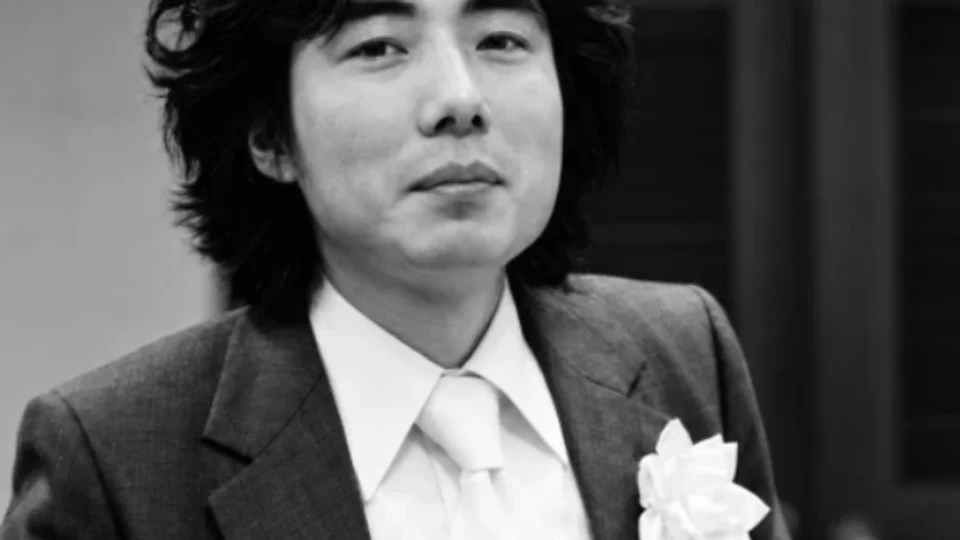
The line was feverish, charcoal-like, brimming with an almost unbearable sincerity. Shin-ichi Abe, one of the most singular craftsmen of postwar Japanese comics, passed away on November 14, 2024, at the age of 75, from heart failure. With him, one of the final incandescent voices of watakushi manga, this “I-manga” that shattered the archipelago's graphic codes at the turn of the 1970s, evaporates.
Far from flashy epics and adventure stories calibrated for mass consumption, Shin-ichi Abe never ceased to examine one single subject: the ordinariness of his own existence, dissected by the scalpel of a tenacious melancholy and visceral love.
Asagaya, electric bohemianism and paper confessions
Born in 1950 in Fukuoka Prefecture, on the island of Kyushu, the young man moved to Tokyo early on with a burning ambition to paint and tell stories. It was in the Asagaya district, a haven for broke artists, nocturnal jazzmen, and political protesters, that he set down his bags and found his muse: Miyoko. This young woman, a companion in misfortune and a beacon in the fog, would become the tragic and luminous heroine of his masterpiece, A Sweet Guy (Miyoko Asagaya kibun), published in 1971.
Under the pages of the legendary avant-garde magazine Garo, a sanctuary for rebellious spirits led by Katsuichi Nagai, Shin-ichi Abe unveiled a clinical writing of everyday life. The tiny rooms of four and a half tatami mats, the acrid smoke of cigarettes shared at dawn, existential doubts, cheap alcohol, and the raw sensuality of a young couple: every panel captures the vertigo of a youth in revolt against the Japanese economic miracle.
“I could only draw what I lived, with the constant fear that everything would collapse before my eyes.”
This confession, distilled through his rare interviews, summarizes the tightrope-walk trajectory of a creator incapable of erecting a boundary between his inkwell and his nervous system.
The vertigo of the intimate to the point of psychic burn
Alongside authors like Yoshiharu Tsuge or Shinji Nagashima, Abe pushed graphic autofiction to its absolute limits. His style broke free from the traditional grammar of manga: dense cross-hatching, faces with hallucinated gazes, radical narrative ellipses. In his work, the silence of the protagonists weighs as much as the dialogue of an existentialist play.
However, this perpetual baring of the soul exacts a heavy toll. Ravaged by alcoholism, financial instability, and an emerging schizophrenia, Shin-ichi Abe endured violent psychotic episodes starting in the mid-1970s. Repeated stays in psychiatric institutions thinned his output, casting the cartoonist into semi-oblivion, even as his underground legend grew within the alternative scene.
Returning intermittently to his drawing table, he still delivered heart-wrenching fragments, oscillating between raw painting and tormented calligraphy, bearing witness to his relentless struggle against his inner darkness.
The lasting echo of an unvarnished body of work
It took the passion of independent publishing houses to make his work shine beyond the island's borders. In France, Éditions Cornélius allowed French-speaking readers to gauge the scale of this comet through masterful collections such as A Sweet Guy or The Marriage.
Shin-ichi Abe proved that comics could achieve the confessional power of a novel by Dazai or an expressionist painting. By entrusting his most exposed flaws to the whiteness of paper, this watchman of Asagaya left behind a moving testimony to human fragility, whose abrasive beauty continues to radiate.
Mots-clés
Références & sources
- 01Kyodo News InternationalKyodo News
- 02The Asahi Shimbun Culture & ArtsThe Asahi Shimbun
- 03Cornélius Éditions - Catalogue des œuvres de Shin-ichi AbeCornélius
- 04Musée international du manga de KyotoKyoto International Manga Museum

