
Sahel: The Great Schism Threatening to Fracture West Africa
Between declared emancipation and economic vertigo, the Alliance of Sahel States is dynamiting traditional regional diplomacy codes. An X-ray of a historic secession that is shaking the entire continent.

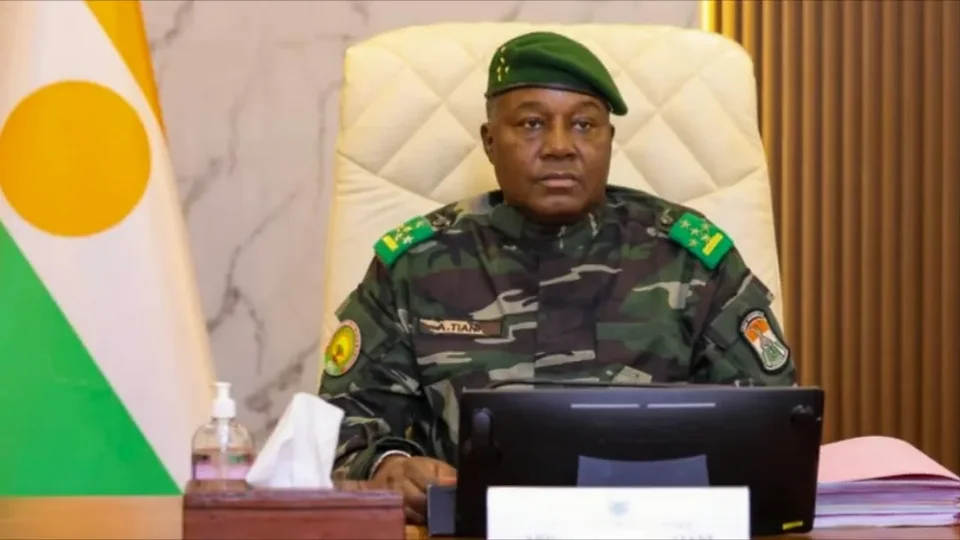
Under the blistering sun of Bamako, Niamey, and Ouagadougou, chancelleries are no longer sleeping. What initially looked like a fleeting outburst has morphed into a major geopolitical earthquake: the Alliance of Sahel States (AES) is formalizing its divorce from the Economic Community of West African States (ECOWAS) and sketching out the contours of a novel integration project. Driven by colonels Assimi Goïta, Ibrahim Traoré, and general Abdourahamane Tiani, this brutal rupture is redefining the sub-regional chessboard by attacking the very heart of military, monetary, and diplomatic sovereignty.
The great leap out of ECOWAS: a political act or a leap into the void?
Leaving a fifty-year-old bloc bringing together more than 400 million inhabitants cannot be done with a stroke of a pen. By denouncing the founding treaty of ECOWAS without notice, the three Sahelian capitals preferred to cut the Gordian knot rather than negotiate democratic transition timelines imposed from Abuja. For the Sahelian military staffs, the West African organization has gone astray by instrumentalizing economic sanction regimes that they deem "inhumane, illegitimate, and remote-controlled by foreign powers."
But behind the patriotic momentum celebrated in the streets, the logistical reality must follow. The withdrawal directly threatens the principle of free movement of goods and people, the cornerstone of cross-border trade. Mali and Burkina Faso, landlocked countries, depend on the maritime corridors of Abidjan, Dakar, and Lomé for their strategic supplies. While Togo maintains a stance as a benevolent mediator, the potential introduction of tariff barriers or visas by their coastal neighbors would constitute a formidable trial for Sahelian treasuries.
"We have chosen the path of honor and total sovereignty, the one that is not negotiated in velvet-lined lounges," recently proclaimed captain Ibrahim Traoré before an audience of students won over to his cause.
The battle for the CFA franc: the specter of a new currency
This is the most flammable issue and the one most closely watched by financial markets: the announced exit from the West African Economic and Monetary Union (UEMOA) and the gradual abandonment of the CFA franc. In Sahelian sovereignist circles, this currency inherited from colonization embodies the last chain to break. The AES leaders have already entrusted committees of experts with the task of studying the feasibility of a common currency, sometimes nicknamed "Sahel" in the popular imagination.
However, the venture is one of macroeconomic tightrope walking. The CFA franc, pegged to the euro by a fixed parity guaranteed by the French Treasury, has protected the zone from rampant inflation and ensured relative price stability. Founding a Sahelian central bank requires building up substantial foreign exchange reserves, collateralized on Malian gold, Nigerien uranium, or Burkinabè cotton. Yet, in a context of persistent insecurity and chronic budget deficits, the risk of an immediate depreciation of such a currency directly threatens the purchasing power of local populations.
Moscow, Beijing, Ankara: the great redeployment of alliances
the vacuum left by the departure of French and Western troops has not remained empty for long. By chasing out the forces of Operation Barkhane, the UN mission MINUSMA, and American military personnel from the 101st base in Agadez, the AES has inaugurated a spectacular reconfiguration of its strategic partnerships. Moscow has rushed into the breach, providing instructors, heavy equipment, and attack drones, now under the institutionalized banner of the Africa Corps.
Nevertheless, the diversification goes well beyond Russia. Ankara is establishing itself as an essential supplier of Bayraktar TB2 drones, essential in aerial counter-insurgency, while Beijing is securing its mining supplies, particularly in the Agadem oil field in Niger. This transactional diplomacy offers Sahelian juntas unprecedented room for maneuver: dealing as equals, without conditionalities linked to human rights or the organization of electoral processes.
Between popular resilience and security peril
On the ground, the triumphant rhetoric clashes with the harshness of the front. While the armed forces have regained a foothold in several iconic localities, such as Kidal in northern Mali recaptured at the end of 2023, the jihadist nebula affiliated with Al-Qaeda and the Islamic State is adapting its tactics, multiplying ambushes and economic blockades. Rural populations are paying a heavy humanitarian price for this war of attrition.
Will the alliance of the three nations know how to transform its capital of popular support into lasting security victories and tangible prosperity? By frontally defying regional institutions and historical guardians, Bamako, Niamey, and Ouagadougou are attempting a complete reshuffling of the West African cards. A ridge path, dizzying and without a safety net, the outcome of which will determine the trajectory of the entire continent.
Mots-clés
Références & sources
- 01Communiqués officiels de la Commission de la CedeaoCommunauté économique des États de l'Afrique de l'Ouest
- 02Rapports de situation sur le Sahel et l'Afrique de l'OuestOrganisation des Nations Unies
- 03Données économiques et perspectives régionales en Afrique subsaharienneFonds Monétaire International
- 04Analyses stratégiques et sécuritaires sur le SahelInternational Crisis Group
- 05Dépêches et analyses sur la géopolitique sahélienneAgence France-Presse

